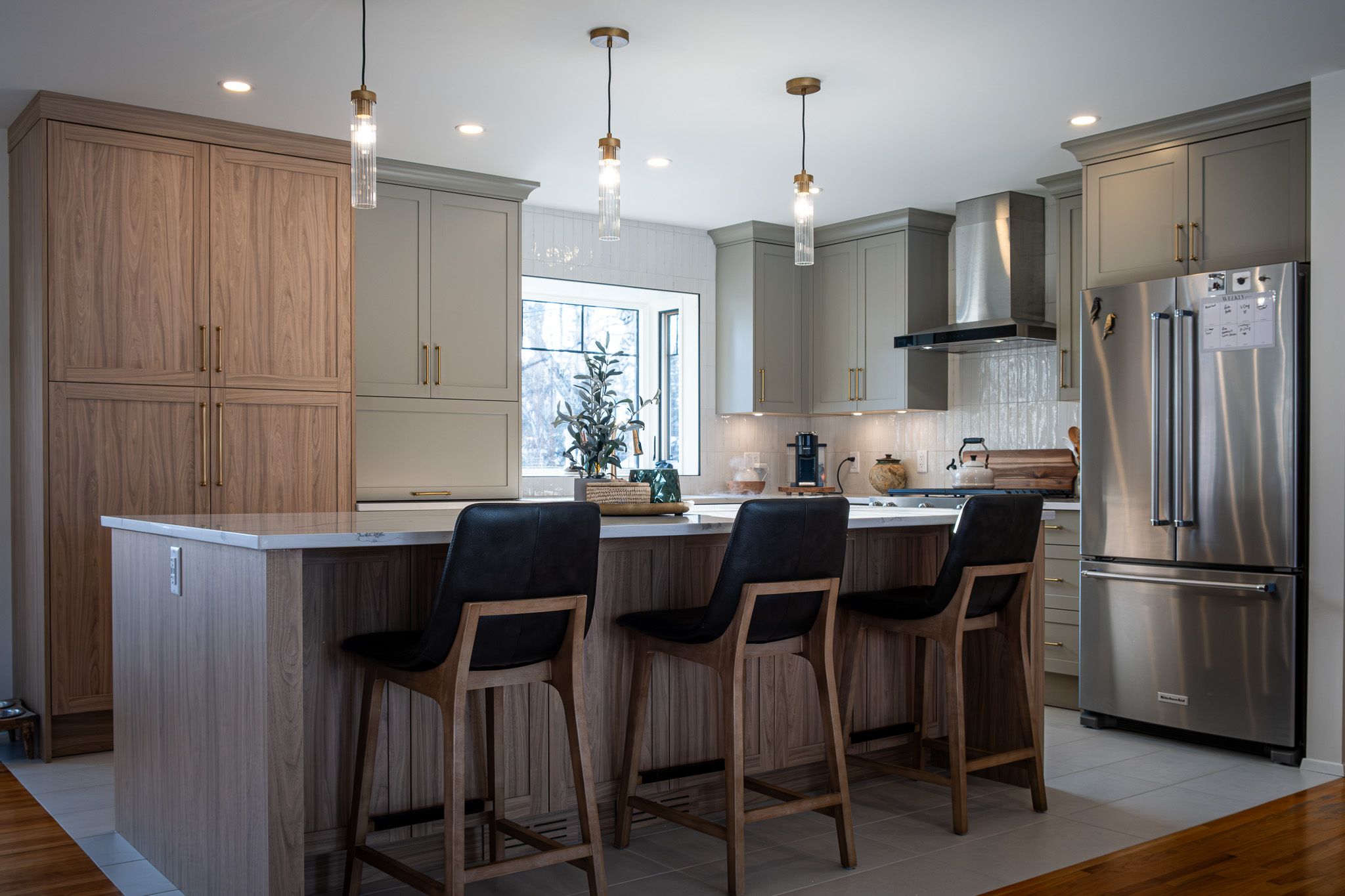
There is something strange that happens at almost every house party. No matter how carefully the living room is arranged for people to sit and socialize, eventually everyone ends up standing around the kitchen. Someone is leaning against the counter, someone is sitting at the island, someone is making drinks, and someone is looking through the fridge. Nobody really decided to meet there, but somehow the kitchen draws everyone in. East Coast Canadians even have a name for it: the kitchen party. I’m sure most of us have found ourselves in one at some point, standing around someone’s kitchen in the wee hours of the morning.
Maybe there’s a reason we’re so drawn to this particular room. For most of human history, fire was at the centre of domestic life. People gathered around it for warmth, food, safety, conversation and companionship. The modern kitchen has inherited much of that role. We don’t necessarily gather around an open flame anymore, but we still gravitate toward the place where food is being prepared. Someone cooks while someone else sits nearby, kids do homework at the island, and people seem to wander into the kitchen even when they don’t really need anything.
The architecture around that gathering place has changed dramatically over time. The fire became the hearth and the hearth eventually became the stove. Kitchens were pushed into separate rooms, particularly when cooking was smoky, dirty and labour-intensive. In wealthier homes, kitchens were often deliberately separated from formal living and dining spaces. Then modern houses gradually reversed that separation. Walls came down, kitchens opened into dining and living spaces, islands became enormous and formal dining rooms became less important. In a lot of houses today, the kitchen occupies some of the most valuable real estate in the entire home. In a strange way, we’ve ended up back where we started, gathering around the place where our food is prepared.
Fire Changed More Than Our Food
It’s hard to overstate the importance of cooking in human history. There is a well-known theory in human evolution that learning to cook food fundamentally changed us. Cooking made food softer, easier to chew and easier for our bodies to digest. Some researchers believe that, over a very long period of time, our bodies changed alongside our relationship with cooked food. Changes in our jaws, teeth and digestive systems may have been influenced by cooking, and the additional energy available from cooked food may have helped support the development of our unusually energy-hungry brains.
The social consequences of this are what I find most interesting. If cooking made food easier to eat and digest, it may also have freed up time and energy for other things: talking, making things, raising children, sharing stories and building relationships. Once you have a fire that needs to be maintained and food being prepared around it, you also have something else: a place that people continually return to. People eat around it, talk around it, children grow up around it and stories get told around it. The fire didn’t just change the way we ate; it gave people a place around which much of their daily lives could unfold. I think our kitchens still do something very similar.
The Modern Hearth
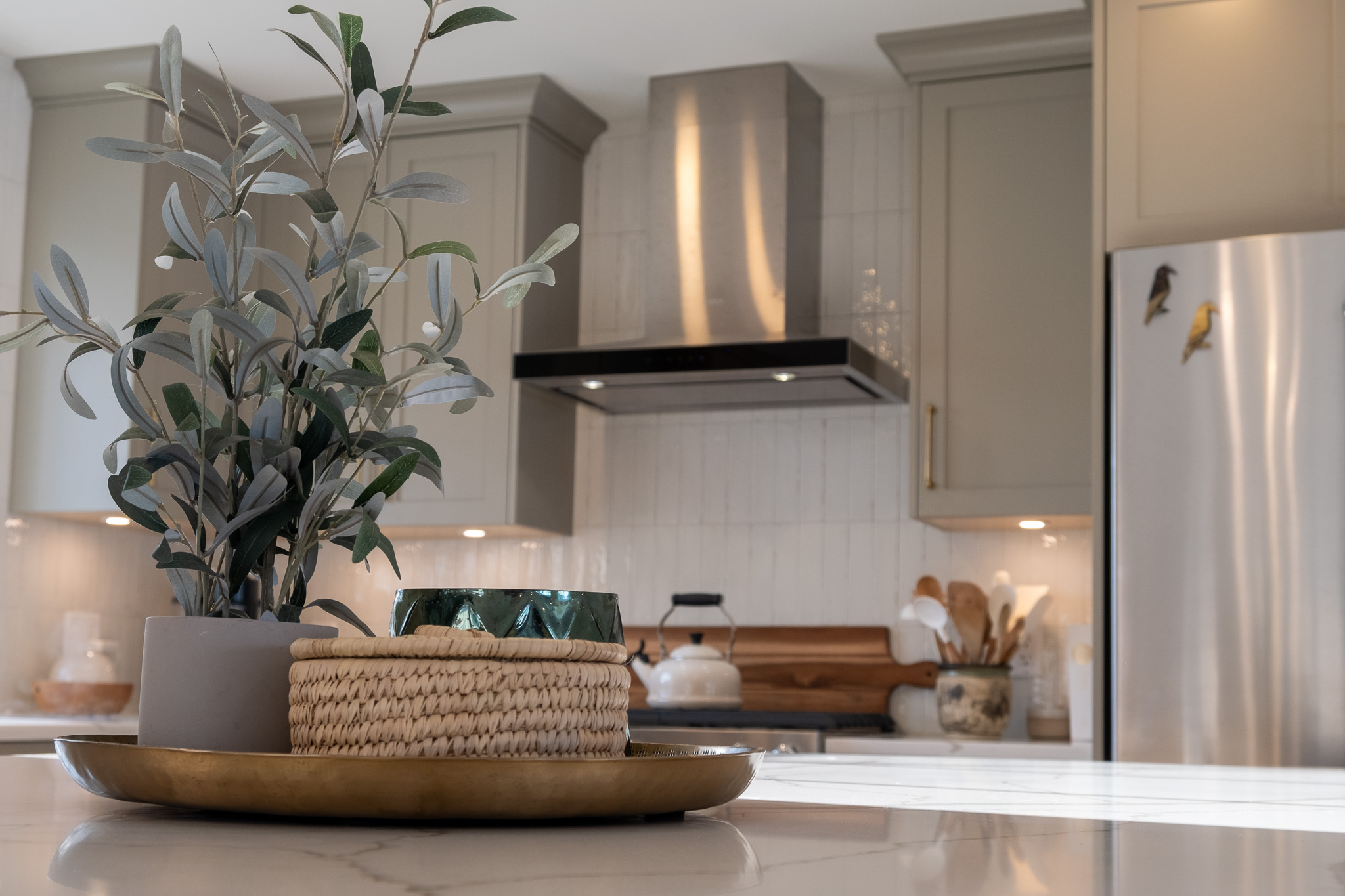
In some ways, the kitchen island might just be our latest version of the hearth. Think about what we’ve done with it. We’ve taken a large object and put it directly in the centre of the room where food is prepared, people sit around it, lights hang above it, kids eat breakfast at it and friends circle around it during parties. The person cooking can face everyone else instead of standing alone with their back to the room.
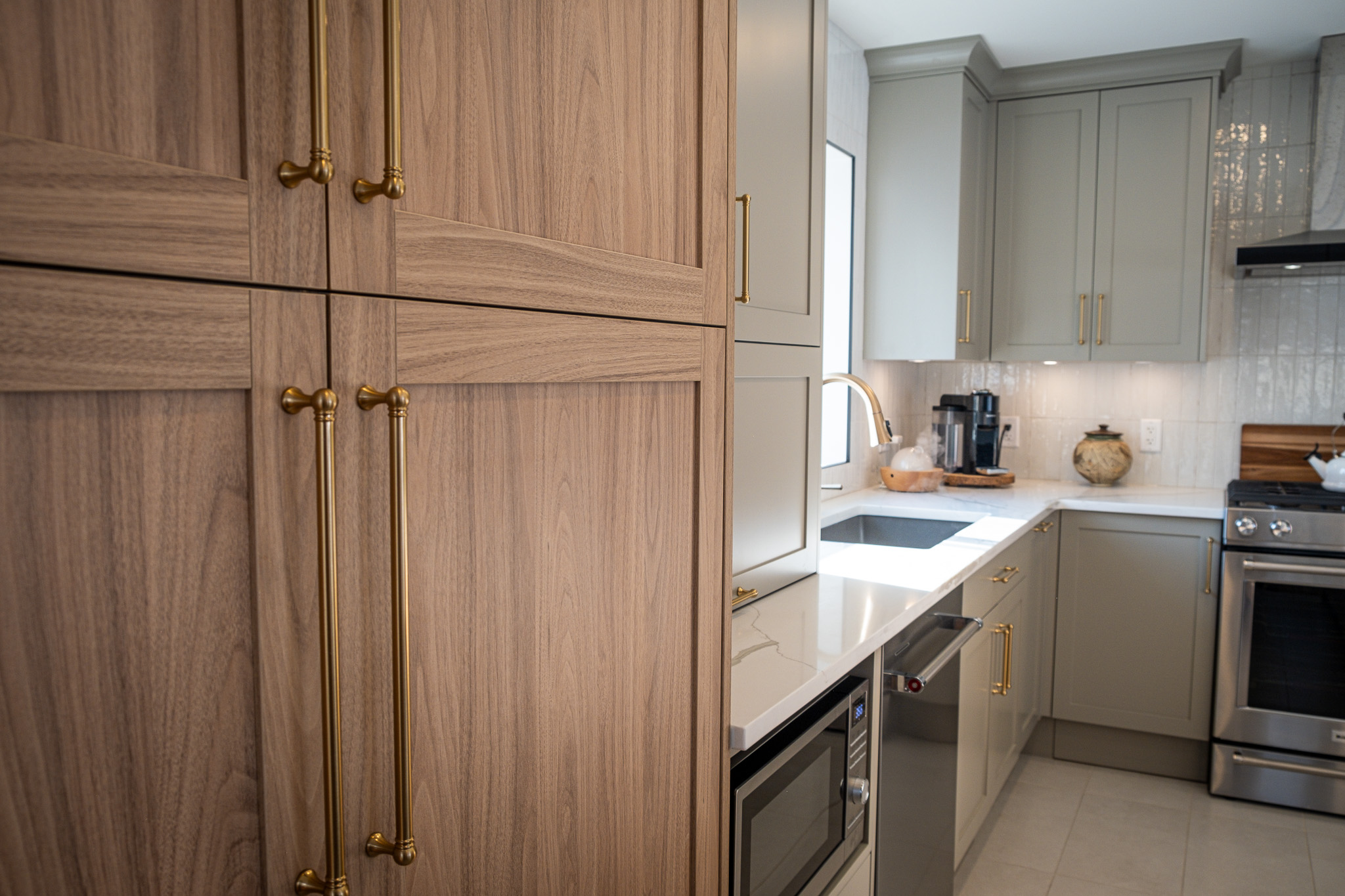
Somewhere along the way, though, I think renovation culture started confusing the things we put into kitchens with the reason kitchens matter in the first place. A kitchen becomes a collection of products: white oak slim-shaker cabinetry, imported natural quartzite, panel-ready appliances, expensive pendants and an enormous island. There seems to be an increasing expectation that a kitchen renovation should include some combination of these things, as though luxury itself is what makes the room successful.
There’s nothing wrong with any of those things. I love beautiful materials, and I make a living building these spaces. Craftsmanship matters, good cabinetry matters and natural stone can be incredible. I just don’t think buying more expensive things inherently creates a better kitchen. A beautiful kitchen and a good kitchen can absolutely be the same thing, but the beauty should support what the room is actually there to do rather than becoming the entire point of it.
What Is the Kitchen Actually For?
When we’re working through a kitchen layout, some of the most important questions are actually pretty simple. Where does someone sit while another person cooks? Can a child be nearby without being underfoot? Can two people cook together comfortably? Can someone grab something from the fridge without walking directly through the main cooking area? Does the island encourage conversation or create a barrier? Where does a kid drop their backpack while a parent starts dinner, and where does someone sit with a coffee on Saturday morning?
These questions are fundamentally about how people live together. A massive island might look incredible in a photograph, but does its size actually make the kitchen work better for the people who live there?
Of course, architecture can’t make people talk to each other, and a kitchen can’t make a family eat dinner together or convince someone to put their phone down. What it can do is create the conditions for those things to happen more naturally. It can give your kid somewhere to sit and tell you about their day while you make dinner, or give six friends somewhere to linger after the meal is finished. Architecture can’t create our relationships for us, but it can give those relationships somewhere to happen.
More Than Gathering
I think there’s another reason the kitchen matters beyond simply being a place to socialize. Cooking for somebody is one of the simplest and oldest acts of caring for another person. A parent makes breakfast for their child, someone cooks dinner for their spouse, friends bring food when somebody is sick or grieving, families prepare enormous meals at Christmas, and parents teach their kids recipes that their own parents taught them. Even something as simple as making coffee for someone who stayed the night is a small act of care.
None of these things are particularly extraordinary, and most of them happen on completely ordinary days. Maybe that’s exactly why they matter. The most important parts of our lives don’t always happen during the big moments; a lot of them happen repeatedly and quietly over many years, and a remarkable number of them happen in the kitchen.
Maybe the kitchen isn’t the heart of the home simply because we’ve decided to call it that. Maybe we keep designing our homes around it because gathering around food and warmth is something we’ve been doing for a very long time. The fire was essential, but so was the life that gathered around it. I think the same is true of the kitchen.
Words by Jared Buote · Better Build & Design
THE THOUGHTFUL RENOVATION
BETTER BUILD & DESIGN